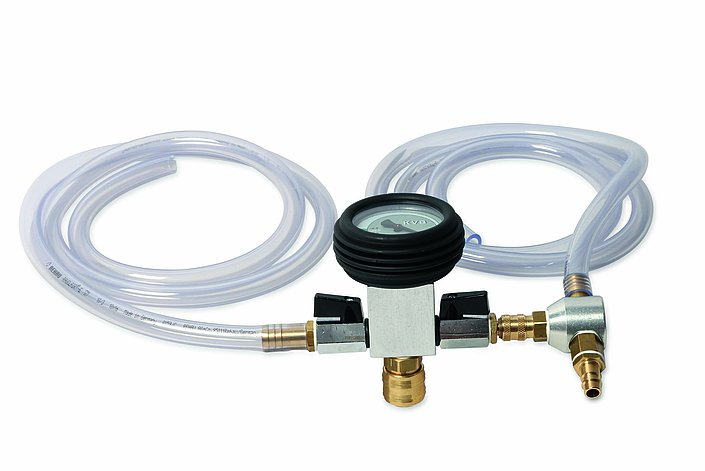
Digital Pressure Gauge Device for Hydraulic Systems (Hydraulic Diagnostic Tool)
This product description showcases high-quality, professional digital pressure measuring devices and related kits designed for the precise diagnostics and monitoring of hydraulic systems in automotive and commercial vehicle services. The digital technology guarantees highly accurate measurements, which are essential for the efficient maintenance and troubleshooting of modern, complex hydraulic systems.
Overall Product Features and Benefits
Digital pressure measurement solutions combine the accuracy and readability of traditional analog instruments with the advantages of modern electronics. These devices are ideal for checking the operational pressure, pressure spikes, and leaks in hydraulic systems, ensuring safe and optimal performance.
Main Advantages:
-
High Accuracy: Digital displays minimize human reading errors, providing precise data for diagnosis.
-
Wide Range of Applications: Specifically suitable for testing various hydraulic systems, including brake systems, steering systems, and industrial hydraulic equipment.
-
Robust Construction: Designed to withstand the harsh conditions of workshops, ensuring long service life and reliability.
-
Simple Operation: Intuitive user interface and easily interpretable digital displays aid in fast and efficient work execution.
Product Categories and Connection Devices
In the field of digital pressure measurement, numerous specific devices and kits are available that cover comprehensive hydraulic diagnostics.
1. Digital Pressure Measurement
These main units form the basis of the measurement, ensuring the recording of accurate pressure readings.
2. Hydraulic Diagnostic Device Digital (Hydraulics Diagnostic Device Digital)
Specially designed digital instruments used for measuring and analyzing the performance of complex hydraulic systems. These devices are often capable of data acquisition and storage as well.
3. Hydraulic Test Case, Digital (Hydraulik-Test Case, Digital)
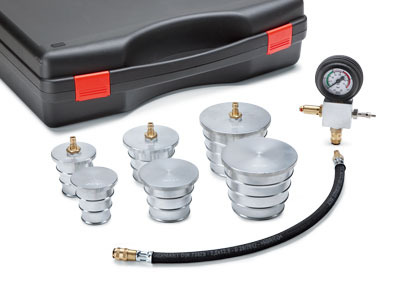
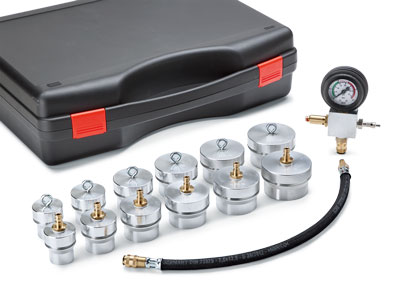
Complete, portable kits that contain all necessary components (measuring unit, hoses, connectors) for immediate start of digital pressure measurement at various locations.
4. Hydraulic Test Strips
Although digital devices dominate, test strips can serve as supplementary tools for quick visual checks or measuring specific pressure ratios where a digital sensor is not ideal.
5. Hydraulics Diagnostic Device Analog
Analog alternatives are also available, which may be preferable in certain cases (e.g., simpler handling, no need for a power source), but digital versions offer the highest level of accuracy.
Technical Specification Comparison
The choice between digital and analog systems often depends on the required accuracy and the complexity of the system. The table below summarizes the key technical parameters characteristic of digital diagnostic devices:
| Parameter |
Digital Measuring Unit (Characteristic) |
Analog Measuring Unit (Characteristic) |
| Measurement Accuracy |
Extremely high (e.g., ±0.5% FS) |
Medium (e.g., ±1.6% FS) |
| Resolution |
High (e.g., 0.1 bar / 1 psi) |
Lower (depends on the scale) |
| Display Type |
LCD/LED digital display |
Printed scale, indicator |
| Data Acquisition |
Possible (internal memory or PC connection) |
Not possible |
| Units of Measure |
Multiple selectable (bar, psi, MPa, etc.) |
Generally fixed (e.g., only bar) |
| Operating Temperature |
Wide range (e.g., -10°C – +60°C) |
Similar, but may be more sensitive to temperature |
| Tápellátás |
Battery/Accumulator |
No external power supply required |
Application Areas in Vehicle Diagnostics
These precision measuring devices are crucial in the following areas:
-
Brake System Check: Testing brake pressure is fundamental for safe operation. Digital testers allow for accurate measurement of the effective pressure in the hydraulic brake system and the evolution of pressure loss over time.
-
Steering Systems: Checking the power assistance of the power steering, including pump performance and integrity of hydraulic lines.
-
Transmission Diagnostics: Measuring automatic transmission (ATF) pressure to examine shifting quality and valve body operation.
-
Hydraulic Drives: Any industrial or automotive application where monitoring the pressure of hydraulic power transmission is critical (e.g., lifting systems, hydraulic running gear).
Accessory Tools for Complete Hydraulic Maintenance
In addition to pressure measurement, workshops also require other connected tools that ensure comprehensive servicing of hydraulic systems:
1. Cooling System Diagnostics and Filling
Although hydraulics are strictly speaking not the cooling system, the methodology for leak testing and pressure testing shows overlaps. The offering includes:
-
Cooling System Testers: For pressure testing.
-
Vacuum Cooling System Fillers: For removing air bubbles and precise fluid filling.
-
CO2 Leak Detector for Cylinder Head: Although this belongs to motor diagnostics, the principles of leak detection are similar.
2. Brake System Tools
Closely related due to the hydraulic part of the brake system:
-
Brake Fluid Testers: For measuring the water content of the brake fluid.
-
Brake Bleeding Units: For removing air from the system, often with the help of pressure or vacuum.
-
Brake Pressure Testers: Specifically for commercial vehicles and construction machinery.
3. Pumps and Dispensers
Tools for fluid movement necessary for the operation of hydraulic systems:
-
Vacuum and Pressure Pumps: For setting up different pressure ratios for testing purposes.
-
Manual Suction and Dispensing Pumps: For the professional transfer of fluids (oil, fuel).
Summary
Digital hydraulic diagnostic tools are indispensable elements of modern workshops. The capability for high-precision pressure measurement, supported by digital displays and robust design, enables fast, reliable, and documented troubleshooting in the most diverse hydraulic systems. Auxiliary test kits and adapters ensure that the workshop is prepared for every situation.