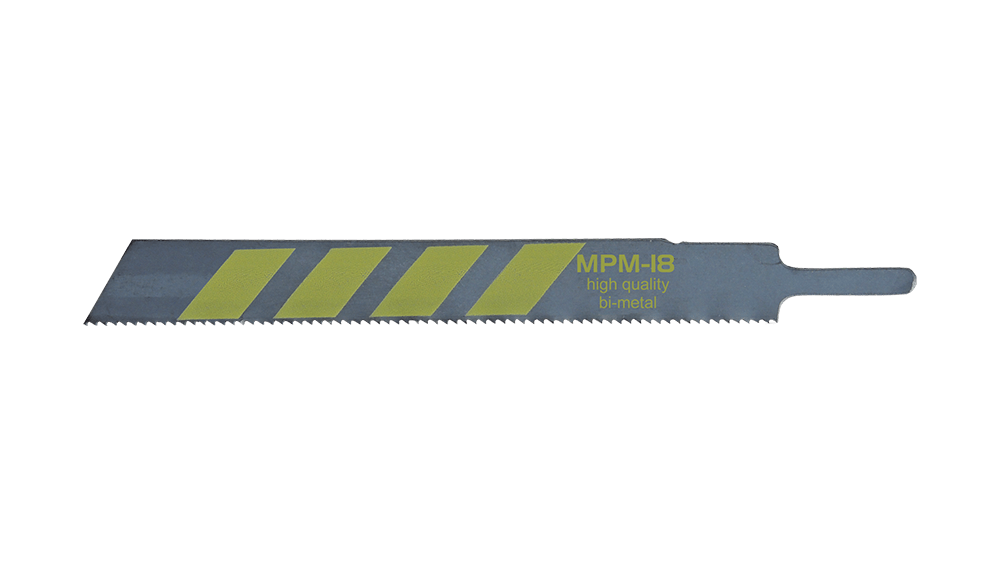
Saw blade MPM 18 TPI 120 mm, Bi-Metal (Part Number: BMWA9500744)
Developed by Wieländer+Schill in close cooperation with automotive manufacturers, this saw blade represents the most modern technology in dismantling tasks. It is specifically designed for the precise and efficient cutting of high-strength steels and alloys, making it an ideal choice for professional body repair workshops.
Comprehensive Product Description
A BMWA9500744 The 120 mm bi-metal saw blade with this part number is excellently suited for machining materials whose tensile strength reaches 1000 MPa. This specification ensures that even the cutting of structural elements of the hardest modern vehicles can be done quickly and reliably.
To maximize the service life of the blade, especially when cutting harder steels, the use of a suitable cutting fluid is strongly recommended. Cutting oil is an excellent choice as it protects the saw blade from excessive heating, thereby maintaining optimal cutting performance and extending the tool's service life.
The 18 TPI (teeth/inch) pitch results in a finer cutting surface while providing sufficient material removal rate for efficient work. The bi-metal construction guarantees flexibility and wear resistance, combining fast cutting capability with a long service life.
This product belongs to the OEM (Original Equipment Manufacturer) recommendations category, which confirms its quality and compatibility against the strictest industry requirements.
Technical Data and Properties
The following table details the key technical parameters of the saw blade:
| Property |
Value |
Note |
| Part number |
BMWA9500744 |
Unique Identifier |
| Length |
120 mm |
Total length of the saw blade |
| Material |
Bi-metal |
Flexibility and Durability |
| Tooth Pitch (TPI) |
18 tpi |
Number of teeth per inch (for fine cutting) |
| Field of application |
Machining of high-strength steels |
Up to 1000 MPa hardness |
| Package contents |
1 piece (1 stück) |
Custom packaging |
| Recommended accessory |
Cutting oil/Cutting fluid |
To increase tool life |
Detailed Main Features
1. Bi-Metal Construction:
Bi-metal saw blades are made from two different metals. The material of the teeth is extremely hard, wear-resistant high-speed steel (HSS), which retains its sharpness exceptionally well even at high temperatures. The body of the blade is made of more flexible, impact-resistant spring steel, which prevents the blade from breaking, especially during cutting processes loaded with vibrations. This combination is ideal for materials of varying hardness.
2. Handling High-Strength Steels (1000 MPa):
Modern vehicle bodies increasingly use high-strength steel (HSS) and ultra-high-strength steel (UHSS) alloys to reduce weight and increase passive safety. This saw blade is specifically optimized for cutting these materials, ensuring a clean, burr-free cut without the tool wearing out prematurely.
3. 18 TPI Tooth Pitch:
A density of 18 teeth per inch (TPI) falls into the finer category on the saw blade scale. This tooth pitch is ideal for thinner profiles and tubes, as well as situations where surface quality is critical. The dense tooth structure reduces vibration and the tool's tendency to „jam” in the workpiece.
4. Length 120 mm:
The 120 mm length represents a standard size for many portable, pneumatic, or electric dismantling tools, ensuring broad compatibility with equipment used in workshops.
Application Areas
This saw blade primarily delivers outstanding performance in the following areas:
-
Body Repair: Cutting of metal sheets, subframes, reinforcements, especially high-strength steel alloys.
-
Vehicle Structure Demolition: Demolition of hard-to-reach or welded/glued structures.
-
General Metalworking Tasks: Any application where cutting steels, stainless steels, or other alloys with hardness below 1000 MPa is required.
Usage Recommendations for Maximum Performance
To achieve optimal blade lifespan and cutting efficiency, we recommend the following:
-
Cooling and Lubrication: Always use an adequate amount of cutting oil. Cooling is critical for bi-metal blades, as heat can reduce tooth hardness. Proper lubricant reduces friction and dissipates heat.
-
Appropriate Speed: The cutting speed must always be adjusted to the hardness of the material. A lower speed is recommended for harder materials.
-
Consistent Pressure: Avoid sudden, excessive pressure. The blade should operate with slightly more than its own weight, but with even pressure. Excessive pressure can cause tooth breakage or premature blade wear.
-
Tooth Engagement Suitability: 18 TPI is ideal for hard but not extremely thick materials. For thicker materials (e.g., above 6 mm), it may be advisable to choose a blade with a lower TPI for faster material removal.
This Wieländer+Schill saw blade represents reliability and professional quality in separation technologies.